Buy designcoach.eu ?
We are moving the project
designcoach.eu .
Are you interested in purchasing the domain
designcoach.eu ?
domain@kv-gmbh.de · 0541-91531010
Buy designcoach.eu ?
Is it "le présent texte" or "le texte présent"?
The correct phrase is "le texte présent." In French, adjectives generally come after the noun they modify, so "présent" should come after "texte." Therefore, the correct phrase is "le texte présent." **
Does it say "le présent texte" or "le texte présent"?
It says "le présent texte." **


Similar search terms for Présent
Top-Angebote
Products related to Présent:
-
Sesderma Reti Age 5 Liposomal Serum Anti-Aging Innovation 30mLA facial serum for wrinkles and signs of ageing. Reduces wrinkles and fine lines. Hydrates and strengthens barrier. Restores youthful radiance. 5-Retinoid System: smooths wrinkles, accelerates renewal, and boosts collagen. Biomimetic Peptides: fill expression lines by stimulating collagen synthesis.53,26 £*Shipping: 5,22 £Secure redirect to the provider
-
Inspired Deals Racing Style Car Body Sticker Decal For Sports Cars & Auto Customization silverTransform your vehicle from ordinary to eyecatching in minutes. This stylish car body sticker is designed for drivers who want a sportier, more dynamic look without expensive modifications. Featuring a bold racinginspired design, it instantly adds...39,97 $*Shipping: 0,00 $Secure redirect to the provider
-
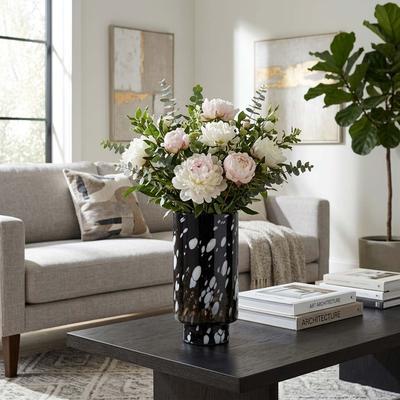
Sagebrook Home Hennie Black & White Glass Vase CraftsmanshipElevate your space with the essence of elegance through Sagebrook Home's exquisite glass vase. Expertly crafted from the finest materials, this delicate piece is a testament to timeless beauty, poised to enhance any bouquet.79,99 $*Shipping: 0,00 $Secure redirect to the provider


-
How is the Subjonctif Présent used in French?
The Subjonctif Présent is used in French to express doubt, uncertainty, desire, necessity, or emotion. It is often used after certain verbs and expressions that indicate these feelings, such as "vouloir que" (to want that), "il est important que" (it is important that), or "il faut que" (it is necessary that). The Subjonctif Présent is conjugated differently from other verb tenses and has specific endings for each subject pronoun. It is important to pay attention to the context in which the Subjonctif Présent is used to understand its meaning and usage. **
-
What is the difference between Imparfait and Conditionnel présent?
The Imparfait is used to describe ongoing or repeated actions in the past, while the Conditionnel présent is used to express hypothetical or uncertain actions in the present or future. The Imparfait is used to set the scene or provide background information, while the Conditionnel présent is used to express a condition or consequence. Additionally, the Imparfait is formed by adding specific endings to the root of the verb, while the Conditionnel présent is formed by adding specific endings to the infinitive form of the verb. **
-
How do you distinguish between the Imparfait, the Conditionnel Présent, and the Futur Simple in French?
In French, the Imparfait is used to describe ongoing or repeated actions in the past, while the Conditionnel Présent is used to express hypothetical or uncertain actions in the present or future. The Futur Simple, on the other hand, is used to talk about actions that will happen in the future. To distinguish between them, pay attention to the context of the sentence and the time frame being referred to. The Imparfait will typically be used for past actions, the Conditionnel Présent for hypothetical situations, and the Futur Simple for future events. **
-
Should the focus on a PC be more on aesthetics or functionality?
The focus on a PC should strike a balance between aesthetics and functionality. While aesthetics can enhance the overall user experience and make the PC visually appealing, functionality is crucial for ensuring optimal performance and usability. It is important to prioritize functionality to meet the practical needs of users, but aesthetics should not be overlooked as it can also contribute to user satisfaction and enjoyment. Ultimately, a well-designed PC should seamlessly integrate both aesthetics and functionality to provide a satisfying user experience. **


Do you pay attention to sporty elegance in your clothing style?
As an AI, I don't have a personal clothing style, but I can tell you that sporty elegance is a popular and versatile trend that many people incorporate into their wardrobe. It combines the comfort and functionality of sportswear with the sophistication and polish of elegant clothing, creating a stylish and modern look. Whether it's through the use of athletic-inspired pieces, sleek silhouettes, or a mix of sporty and dressy elements, sporty elegance can add a dynamic and fashionable touch to any outfit. **
What makes elegance?
Elegance is a combination of simplicity, grace, and refinement. It is about being stylish and sophisticated without being flashy or overdone. Elegance can be seen in the way someone carries themselves, in their mannerisms, and in their choice of words and actions. It is a timeless quality that exudes class and charm. **
Top-Angebote
Products related to Présent:
-
Pan Make Brilliant Work: Lessons on Creativity, Innovation and Success by Rod Judkins - Paperback - Self-Help/Business Creativity Guide, Author ofMake Brilliant Work is an inspiring guide by Rod Judkins, drawing on the real-life stories of visionaries from Frida Kahlo to Steve Jobs. This paperback book reveals the methods and mindsets that turn ordinary effort into extraordinary results. Judkins proves that talent alone never guaranteed success — persistence, risk-taking and original thinking did. A motivating read for anyone wanting to unlock their creative potential at work or in life. The book profiles figures who failed at school, were told they lacked talent, or were fired more than once, yet went on to achieve great things. Written by Rod Judkins, published by Pan Macmillan, this book is a reassuring truth: you don't have to be naturally brilliant to produce brilliant work.2,99 £*Shipping: 2,99 £Secure redirect to the provider
-
EORC Gray Hand-Woven Wool Contemporary Natural Wool Flat Area Rug - Modern Elegance and Timeless CraftsmanshipIntroducing the Gray Hand-Woven Wool Contemporary Natural Wool Flat Area Rug, a stunning blend of modern elegance and timeless craftsmanship.464,11 $*Shipping: 0,00 $Secure redirect to the provider
-
Sesderma Reti Age 5 Liposomal Serum Anti-Aging Innovation 30mLA facial serum for wrinkles and signs of ageing. Reduces wrinkles and fine lines. Hydrates and strengthens barrier. Restores youthful radiance. 5-Retinoid System: smooths wrinkles, accelerates renewal, and boosts collagen. Biomimetic Peptides: fill expression lines by stimulating collagen synthesis.53,26 £*Shipping: 5,22 £Secure redirect to the provider
-
Is it "le présent texte" or "le texte présent"?
The correct phrase is "le texte présent." In French, adjectives generally come after the noun they modify, so "présent" should come after "texte." Therefore, the correct phrase is "le texte présent." **
-
Does it say "le présent texte" or "le texte présent"?
It says "le présent texte." **
-
How is the Subjonctif Présent used in French?
The Subjonctif Présent is used in French to express doubt, uncertainty, desire, necessity, or emotion. It is often used after certain verbs and expressions that indicate these feelings, such as "vouloir que" (to want that), "il est important que" (it is important that), or "il faut que" (it is necessary that). The Subjonctif Présent is conjugated differently from other verb tenses and has specific endings for each subject pronoun. It is important to pay attention to the context in which the Subjonctif Présent is used to understand its meaning and usage. **
-
What is the difference between Imparfait and Conditionnel présent?
The Imparfait is used to describe ongoing or repeated actions in the past, while the Conditionnel présent is used to express hypothetical or uncertain actions in the present or future. The Imparfait is used to set the scene or provide background information, while the Conditionnel présent is used to express a condition or consequence. Additionally, the Imparfait is formed by adding specific endings to the root of the verb, while the Conditionnel présent is formed by adding specific endings to the infinitive form of the verb. **
Similar search terms for Présent
-
Inspired Deals Racing Style Car Body Sticker Decal For Sports Cars & Auto Customization silverTransform your vehicle from ordinary to eyecatching in minutes. This stylish car body sticker is designed for drivers who want a sportier, more dynamic look without expensive modifications. Featuring a bold racinginspired design, it instantly adds...39,97 $*Shipping: 0,00 $Secure redirect to the provider
-
Sagebrook Home Hennie Black & White Glass Vase CraftsmanshipElevate your space with the essence of elegance through Sagebrook Home's exquisite glass vase. Expertly crafted from the finest materials, this delicate piece is a testament to timeless beauty, poised to enhance any bouquet.79,99 $*Shipping: 0,00 $Secure redirect to the provider
-
Chenille Deep Seat Sofa with Modular CustomizationMade of breathable and comfortable chenille fabric, this modern sofa is both attractive and cozy. The breathable material offers a delicate, skin-friendly touch, is easy to maintain for daily use, and perfectly combines comfort and practicality.923,49 $*Shipping: 0,00 $Secure redirect to the provider
-
How do you distinguish between the Imparfait, the Conditionnel Présent, and the Futur Simple in French?
In French, the Imparfait is used to describe ongoing or repeated actions in the past, while the Conditionnel Présent is used to express hypothetical or uncertain actions in the present or future. The Futur Simple, on the other hand, is used to talk about actions that will happen in the future. To distinguish between them, pay attention to the context of the sentence and the time frame being referred to. The Imparfait will typically be used for past actions, the Conditionnel Présent for hypothetical situations, and the Futur Simple for future events. **
-
Should the focus on a PC be more on aesthetics or functionality?
The focus on a PC should strike a balance between aesthetics and functionality. While aesthetics can enhance the overall user experience and make the PC visually appealing, functionality is crucial for ensuring optimal performance and usability. It is important to prioritize functionality to meet the practical needs of users, but aesthetics should not be overlooked as it can also contribute to user satisfaction and enjoyment. Ultimately, a well-designed PC should seamlessly integrate both aesthetics and functionality to provide a satisfying user experience. **
-
Do you pay attention to sporty elegance in your clothing style?
As an AI, I don't have a personal clothing style, but I can tell you that sporty elegance is a popular and versatile trend that many people incorporate into their wardrobe. It combines the comfort and functionality of sportswear with the sophistication and polish of elegant clothing, creating a stylish and modern look. Whether it's through the use of athletic-inspired pieces, sleek silhouettes, or a mix of sporty and dressy elements, sporty elegance can add a dynamic and fashionable touch to any outfit. **
-
What makes elegance?
Elegance is a combination of simplicity, grace, and refinement. It is about being stylish and sophisticated without being flashy or overdone. Elegance can be seen in the way someone carries themselves, in their mannerisms, and in their choice of words and actions. It is a timeless quality that exudes class and charm. **
* All prices are inclusive of VAT and, if applicable, plus shipping costs. The offer information is based on the details provided by the respective shop and is updated through automated processes. Real-time updates do not occur, so deviations can occur in individual cases. ** Note: Parts of this content were created by AI.